
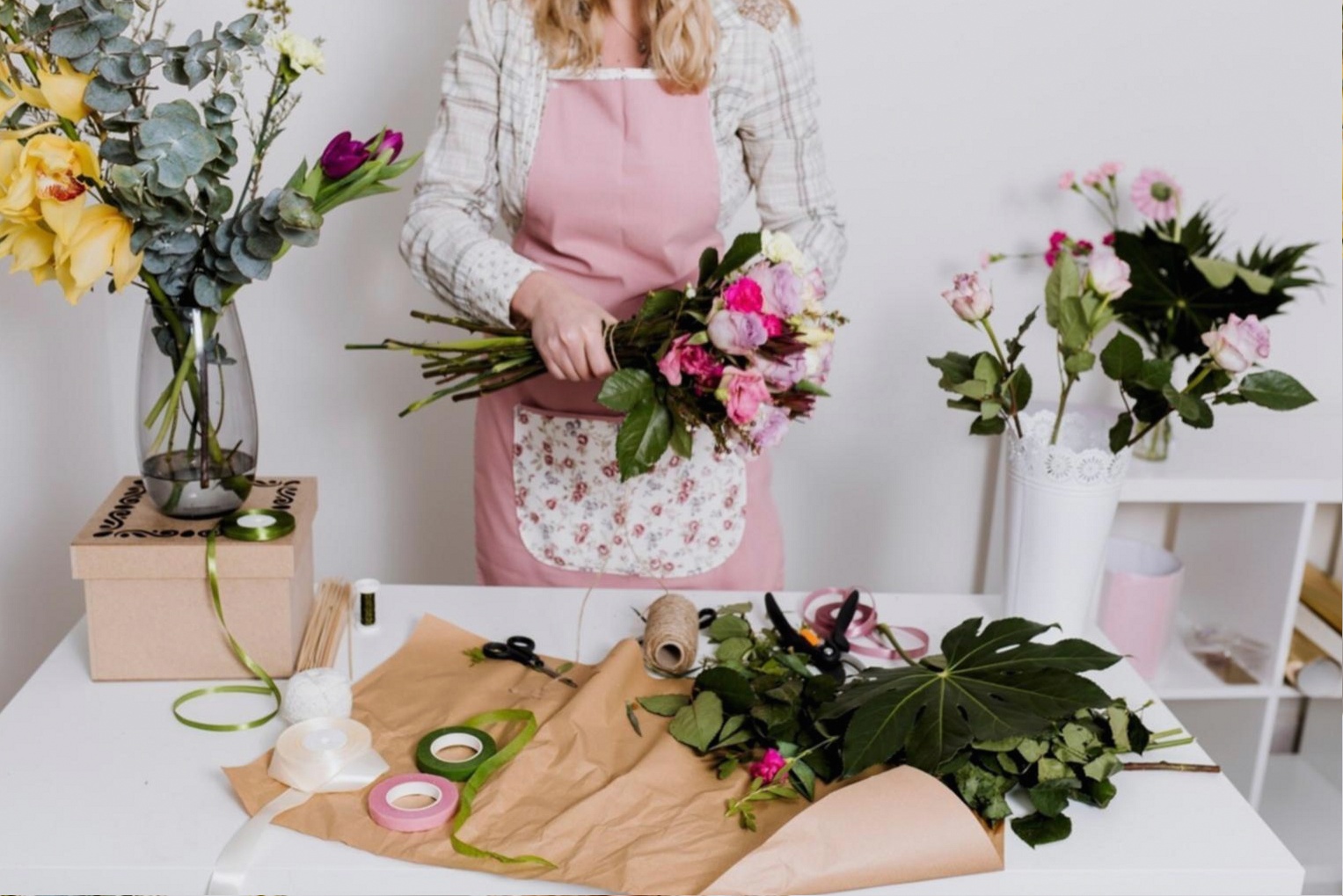
Where structure meets craft
Claimpromozone teaches parallel floristry technique through live online seminars — precise, methodical, and grounded in real workshop practice. Students engage with instructors directly, not through pre-recorded slides.
A focused platform built around one technique
Parallel floristry arranges stems in strict vertical or horizontal lines — no spiralling, no crossing. It demands spatial reasoning and consistent stem spacing, skills that take deliberate practice to develop.
Since 2017, Claimpromozone has run structured seminars where participants work through the technique step by step, with live feedback on their arrangements. The format suits both working florists and students exploring design fundamentals.
- Seminars cover stem selection, grid construction, and proportion balance
- Participants submit arrangement photos for instructor critique during sessions
- Each cohort is kept small enough for genuine discussion — not a broadcast
The seminars run across multiple time zones, so scheduling is flexible. Participants join from Australia, Europe, and Southeast Asia.
Parallel technique is stricter than it looks. Even a 5-degree deviation in stem angle changes the visual weight of the whole arrangement — instructors address this specifically during critique rounds.
Sessions are held via video conference. Participants need fresh stems, a working surface, and basic tools — no studio equipment required.
A mix of professional florists looking to formalise their technique and design students building a portfolio foundation. Prior floristry experience is helpful but not required.
Orla Fennelly
Lead Instructor
Orla has worked with parallel and grid-based floral design for over twelve years. She focuses on the geometry of arrangement — how stem count, height ratio, and container width interact.

Tadeusz Wrona
Design Analyst
Tadeusz reviews participant submissions and provides written critique between sessions. His background is in botanical illustration, which shapes how he reads proportion and negative space.

Saoirse Mullan
Programme Coordinator
Saoirse manages scheduling, participant onboarding, and the resource library. She is the first point of contact for questions about upcoming seminars and session materials.
How seminars are structured
Each seminar opens with a short demonstration of the target arrangement. Participants observe stem placement, spacing decisions, and material selection before attempting their own version.
Mid-session, participants share their work on camera. Feedback is specific — not "looks good" but "the third row stems are 2 cm too tall relative to the container rim."
After critique, participants adjust and rebuild. The second attempt is always more instructive than the first — that gap is where the actual learning happens.
The final segment is open discussion — participants compare approaches, ask about material substitutions, and raise problems from their own practice.